Fiber optic cable is an advanced type of network cable, offering significantly improved performance in terms of bandwidth and data carrying than traditional metal conductor versions.
Optical fiber cabling is used to transfer information via pulses of light, which pass along one or more – indeed, anything up to a couple of hundred in some cases – transparent glass or plastic pipes. Each of these strands is little wider than an average hair, and will normally be surrounded by a further layer of cladding (also in glass or plastic, but constructed at a different density to the main inner strand).
Wrapped around the cladded fibers, there’s also a sheath made up of a couple of layers of insulated casing. This usually comprises a protective wrapper, known as a buffer tube, followed by a final outer jacketing designed to protect the multi-stranded cable as a whole.
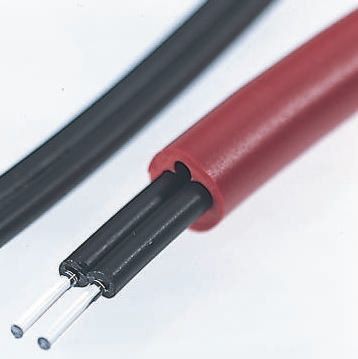
The light pulses are confined within the transparent parts of the fibre cable thanks to its internal reflective properties, moving in a zig-zagging pattern to pass around bends as they travel along the full run length of the fibre optics. In order to retain sufficient signal strength throughout particularly long cable runs, they may need to be converted to an electrical signal and back to a light pulse again at various points along the way. This is done by additional internal components known as repeaters.
When the light signals eventually reach their intended destination – having been travelling at around 70% the speed of light for most of the way – they can finally be interpreted as data or communication signals and converted to an output by the receiving equipment.
Advantages of optical fiber cables
As previously noted, fiber optic cabling has a number of key characteristics that give it a clear advantage over traditional metal conductor cables in several important criteria. These include:
Bandwidth and data transfer – Older metal data cables, usually copper, offer relatively limited bandwidth compared to fibre optics. Copper-type communication cabling was originally developed to transmit voice signals, which don’t require nearly as much bandwidth for mass data transfer as many modern applications now demand.
Speed – Using light pulses as the primary source of information conveyance gives fibre optic cables a huge speed advantage when compared to other modes of data transfer. Fibre will generally far outstrip the expected performance of even high-grade (Cat5 or Cat6) copper cables in this regard.
Distance – As well as being lightning fast, fibre optic cables can also carry their signals over much longer distances than traditional cabling types due to their low rate of signal power loss. Copper cables are usually cited as having a 328-foot limitation in terms of decent quality transfer distance; by contrast, certain single fibre optics can carry a signal over hundreds of kilometres given the right combination of materials, signal type (wavelength) and network setup.
Interference – Fibre optics provide significantly greater protection from interference than traditional metal cable types, because they don’t physically carry an electrical signal. This further boosts their ability to transfer data quickly over much longer distances without suffering significant signal degradation.
Safety and reliability – Another difference between optical fibre and copper cable is that the glass versions tend to be much thinner, lighter and yet sturdier, making them able to withstand much greater pull forces and thus less likely to suffer damage or breakage across long runs than equivalent lengths of metal cabling. Fibre isn’t affected by inclement weather, moisture or extremes of temperature to nearly the same extent that metal wiring can be – and furthermore, the fact that glass fibres don’t carry a current means they don’t present a fire hazard even when damaged or ageing.
Characteristics of fibre optic cables
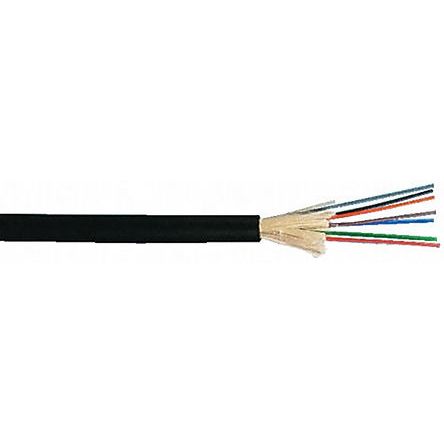
As with any such product or component, there are a number of important characteristics and classifications of optical fibre cabling that will directly affect its efficacy and efficiency in terms of bandwidth, speed, signal strength and more. In this section, we’ll look a little more closely at some of the main influencing factors and properties that might dictate the overall performance of any given fibre optic cable.
Transmission speed of fiber optic cables
Fiber optic data transfer rates will generally be reliant on various factors, chief among them being the ‘mode’ of the cable. As we’ll see in a moment, optical fibers can be arranged either in single mode or multimode configurations, and these will typically deliver higher or lower speeds over a set range of distances.
Regardless of whether you’re using single mode or multimode cable though, fiber optic still offers essentially the fastest mode of commercial-grade network connectivity and communications data transfer available today.
Single mode vs multimode fiber optic cables
Single mode and multimode optical fibers are two different types of cable configuration which deliver varying potential performance levels at distance.As the names suggest, single mode fiber optic cables are built around a single strand of glass fiber with a relatively narrow diameter, while multimode cables are built around larger cores that guide many modes simultaneously.
Single mode fiber involves much less internal reflection as light passes along it, which in turn reduces attenuation and allows for much higher speed data transfer over long distances. By contrast, multimode fiber cabling dramatically increases the amount of reflection, which in turn causes higher dispersion and attenuation rates, and thus increases bandwidth delivery over shorter distances.
Single mode is therefore typically used for extremely long-distance signal transmission, while applications requiring a larger volume of data to be sent over a shorter run (such as communications data within or between relatively localized buildings) tend to use multimode fiber optic cabling.
Multicore fiber optic cables
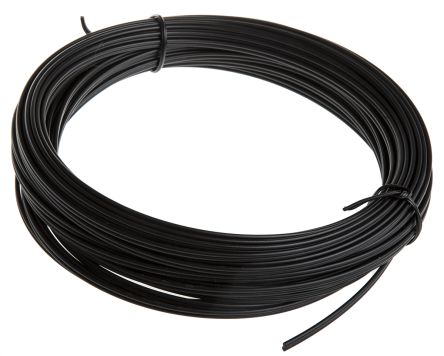
Multimode or multi-core fibre comes in a variety of specifications, ranging anywhere from two to dozens of cores. Common configurations for everyday networking uses such as workplace comms infrastructure include 2-core fibre optic cable, 8-core options and even 24-core varieties. In short, the more cores a cable carries, the greater the amount of bandwidth potential and thus increased ability to handle higher data throughput over shorter distances.
Glass fiber optic cable
Glass optical fiber is more delicate in terms of flex and bend than plastic varieties, and more prone to damage if required to loop tightly or continually be moved around over the length of its run. It can’t be cut, spliced or repaired, meaning it’s less well-suited to applications where a high degree of user flexibility is required.
However, glass fiber optic cables are very robust in terms of mechanical strength and general resistance to moisture, chemical attack, temperature fluctuation and other hostile environments, making it ideal for long-range uses where cables are typically buried or submerged. It’s a particularly versatile type of fiber optic cable with many varying configurations, adapters and fittings available in today’s market.
Glass fiber is most commonly used in very demanding or long-distance applications – tends to be more expensive to buy and install than cheaper-to-produce plastic varieties, while the latter are usually more flexible and easier to work with for the majority of non-specialist installations.


